
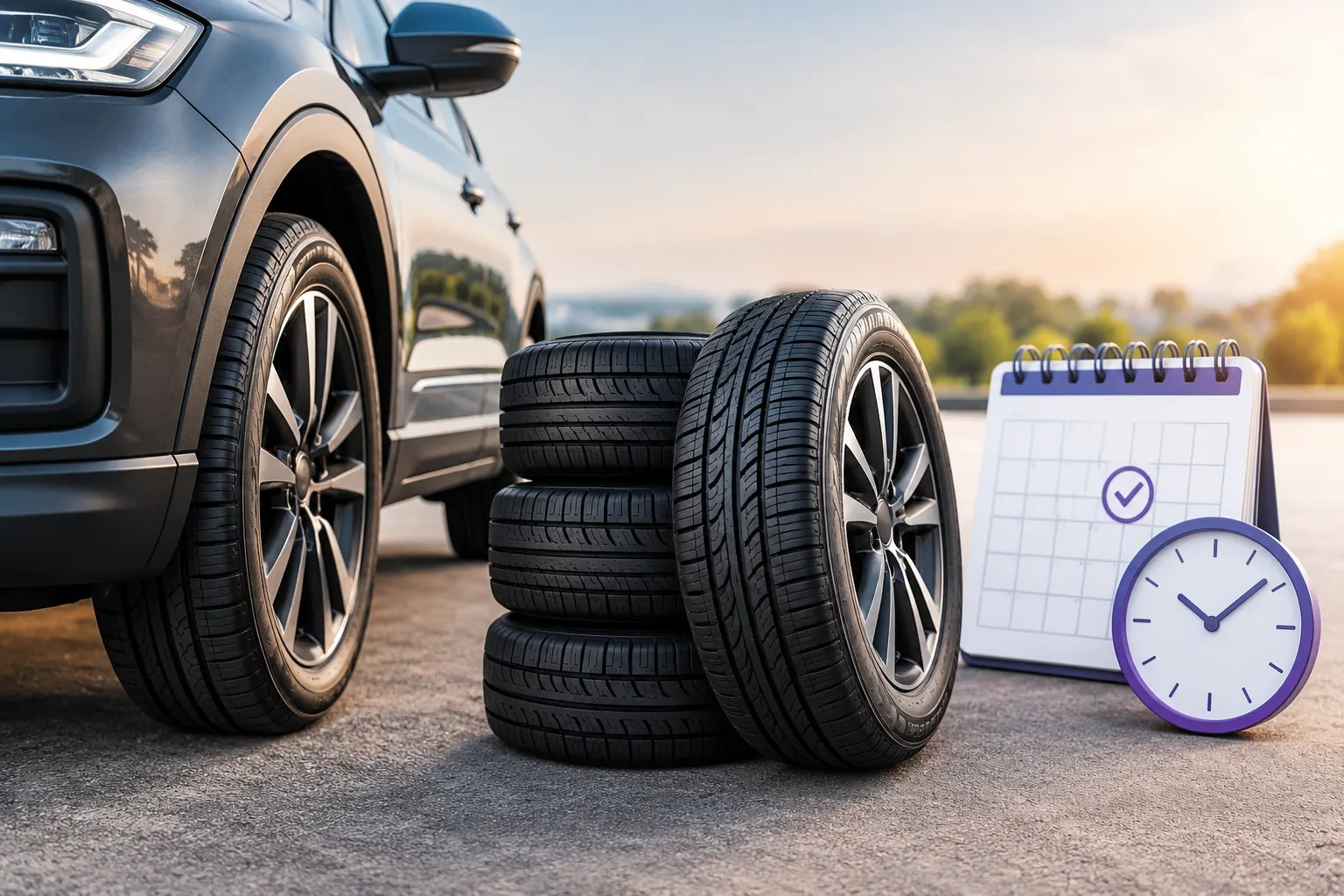
Car tyres are one of the most important safety components of any vehicle. They provide the grip needed for braking, steering and acceleration while helping your vehicle remain stable on different road surfaces. However, tyres do not last forever. Knowing how often you should replace your car tyres can help prevent unexpected breakdowns, poor handling and safety risks.
There is no single replacement interval that applies to every vehicle. Tyre lifespan depends on factors such as driving habits, road conditions, climate, tyre quality, vehicle weight, maintenance and tyre age. Regular inspections can help you determine when your tyres need to be replaced.
How Long Do Car Tyres Usually Last?
Most car tyres can last several years, but their actual lifespan varies significantly. A tyre that is driven regularly on rough roads may wear out much faster than one used mainly for short trips on smooth roads.
As a general guide, many tyres may need replacement after around 40,000 to 80,000 kilometres, depending on their construction, tread compound and usage. However, mileage alone should not determine whether a tyre needs replacing.
Tyres can also deteriorate with age even when they have plenty of tread remaining. Exposure to sunlight, heat, moisture and changing temperatures can gradually affect the rubber.
For this reason, drivers should regularly check both tyre condition and tyre age.
What Are the Signs That Your Car Tyres Need Replacing?
Knowing the warning signs can help you replace tyres before they become a serious safety concern.
1. Low or Worn Tread
Tread provides traction between your vehicle and the road. As tyres wear down, their ability to grip wet and slippery surfaces can decrease.
If the tread is approaching the legal minimum in your location or the tyre’s wear indicators are becoming level with the surrounding tread, it is time to consider replacement.
Do not wait until the tread is completely smooth.
2. Cracks or Visible Damage
Inspect the sidewalls and tread for cracks, cuts, bulges or other visible damage. Cracking can occur because of tyre ageing, exposure to sunlight, heat or improper storage.
A bulge or bubble on the sidewall can indicate internal structural damage and may require immediate tyre replacement.
3. Uneven Tyre Wear
If one part of the tyre is wearing faster than another, there could be an underlying issue.
Common causes include:
- Incorrect wheel alignment
- Incorrect tyre pressure
- Worn suspension components
- Wheel imbalance
- Incorrect tyre rotation
- Driving conditions
Replacing the tyre without addressing the underlying problem may result in the new tyre wearing unevenly as well.
4. Frequent Loss of Air Pressure
If you regularly need to inflate the same tyre, it could indicate a puncture, valve problem, wheel issue or tyre damage.
A gradual pressure loss should not simply be ignored. Correct tyre pressure is essential for handling, braking, fuel efficiency and tyre life.
5. Excessive Vibration or Noise
Unusual vibration through the steering wheel or vehicle can sometimes indicate tyre imbalance, uneven wear, wheel alignment problems or internal tyre damage.
If you notice a sudden change in vibration or road noise, have your tyres inspected by a qualified professional.
Does Tyre Age Matter?
Yes. Tyres can deteriorate over time even if the vehicle has not travelled many kilometres.
The manufacturing date is usually represented by a code on the tyre sidewall. The final four digits indicate the week and year of manufacture. For example, a code ending in “2525” indicates that the tyre was manufactured during the 25th week of 2025.
Older tyres should be inspected regularly for signs of cracking, hardening or other deterioration.
It is also important to distinguish between the manufacturing date and the date when you purchased or installed the tyre. A tyre may have been manufactured some time before it was fitted to your vehicle.
How Does Driving Style Affect Tyre Life?
Your driving habits can have a major impact on how quickly tyres wear.
Aggressive acceleration, hard braking, sharp cornering and frequent high-speed driving can increase tread wear. Regular driving on rough roads, potholes or unsealed surfaces can also contribute to premature tyre damage.
For drivers who frequently carry heavy loads or tow trailers, tyre wear may also occur faster.
A smoother driving style can help extend tyre life while also improving fuel efficiency and vehicle control.
How Does Tyre Pressure Affect Replacement Intervals?
Maintaining the correct tyre pressure is one of the easiest ways to protect your tyres.
Underinflated tyres can increase rolling resistance and generate additional heat, potentially causing faster and uneven tread wear. Overinflated tyres can reduce the contact area with the road and may cause uneven wear.
Check your tyre pressure regularly and follow the vehicle manufacturer’s recommended pressure rather than relying solely on the maximum pressure printed on the tyre sidewall.
Do You Need to Replace All Four Tyres at Once?
Ideally, replacing all four tyres together can help maintain consistent handling and traction, particularly on vehicles with all-wheel drive.
However, if only one or two tyres need replacement, the correct approach depends on tread depth, tyre condition, vehicle drivetrain and manufacturer recommendations.
When replacing fewer than four tyres, it is important to ensure that the replacement tyres are suitable for the vehicle and appropriately matched with the existing tyres.
A tyre professional can advise whether replacing one, two or four tyres is the safest option.
How Can You Make Your Tyres Last Longer?
Proper tyre maintenance can help maximise tyre lifespan.
Check Tyre Pressure Regularly
Inspect tyre pressure at regular intervals and before long journeys. Correct pressure helps promote even wear and proper handling.
Rotate Your Tyres
Regular tyre rotation can help distribute wear more evenly, depending on the vehicle and tyre configuration.
Check Wheel Alignment
If your vehicle pulls to one side or the steering wheel is not centred while driving straight, have the wheel alignment checked.
Inspect Tyres Frequently
Look for cuts, cracks, punctures, bulges and uneven tread wear. Early detection can prevent a minor issue from becoming a major safety problem.
Avoid Overloading Your Vehicle
Excessive loads can place additional stress on tyres. Always follow the vehicle manufacturer’s recommended load limits.
Choose the Right Tyres
Using tyres that match your vehicle’s specifications, driving conditions and load requirements can make a significant difference to performance and durability.
When Should You Replace Your Car Tyres?
There is no universal replacement date for every vehicle. Instead, consider tread depth, tyre age, visible damage, mileage, driving conditions and overall tyre performance.
You should have your tyres professionally inspected if you notice:
- Worn or damaged tread
- Sidewall cracks
- Bulges or cuts
- Uneven wear
- Repeated pressure loss
- Excessive vibration
- Reduced grip
- Tyres that are becoming significantly aged
Replacing tyres before they become severely worn or damaged can provide better traction and help maintain safer vehicle handling.
Conclusion
Knowing how often to replace your car tyres is essential for maintaining vehicle safety, performance and road grip. While many tyres can provide several years and tens of thousands of kilometres of service, their actual lifespan depends on driving habits, maintenance, road conditions, climate and tyre age.
Regular pressure checks, tyre rotations, wheel alignment and professional inspections can help extend tyre life. When your tyres show significant wear, ageing or damage, replacing them promptly is a safer choice than continuing to drive on compromised tyres.
Orienttech W.L.L. provides a range of automotive products and tyre solutions, helping drivers choose tyres suited to their vehicles and driving requirements. Regular tyre inspections and the right replacement tyres can help you enjoy safer and more confident driving.
Frequently Asked Questions
1. How often should car tyres be replaced?
Car tyres generally need replacement based on tread wear, age, damage and driving conditions rather than a fixed schedule. Many tyres may last around 40,000–80,000 km, but actual lifespan varies.
2. How do I know if my tyres need replacing?
Look for worn tread, cracks, cuts, bulges, uneven wear, repeated air-pressure loss, vibration or reduced road grip. A professional tyre inspection can confirm whether replacement is necessary.
3. Can old tyres be unsafe even if the tread looks good?
Yes. Tyre rubber can deteriorate with age due to heat, sunlight and environmental exposure. Therefore, tyre age and overall condition should be considered alongside tread depth.
4. Should I replace all four tyres at the same time?
Replacing all four tyres can provide more consistent handling and traction. However, depending on the vehicle and condition of the existing tyres, replacing two may sometimes be appropriate.
5. How can I make my car tyres last longer?
Maintain the recommended tyre pressure, rotate tyres when appropriate, check wheel alignment, avoid overloading, drive smoothly and inspect tyres regularly for damage or uneven wear.